
Written by licensed insurance agent Andy walker
Reviewed by the Alias Insurance editorial team.
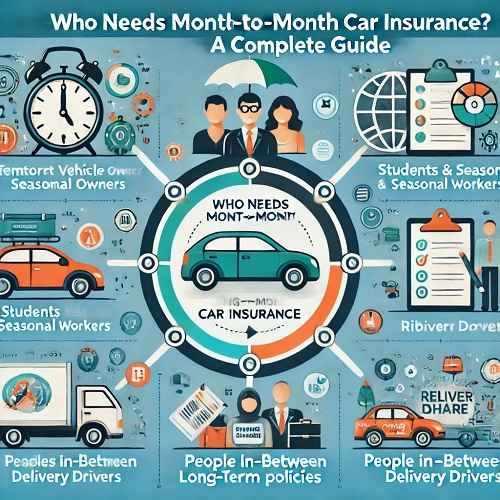
Month to month car insurance is most useful for drivers who want smaller scheduled payments or expect their vehicle needs to change soon. It may fit someone planning to sell a car, a driver with a temporary vehicle, a person who drives a few miles, a seasonal vehicle owner, or someone who expects to move or change insurers within a few months.
There is one fact to understand first. Major U.S. insurers generally do not sell personal auto policies that last exactly one month. Progressive says major companies commonly issue six month or yearly policies. Allstate gives similar guidance. A driver can usually buy a standard policy, pay monthly, and cancel later when coverage is no longer required, subject to state rules, insurer terms, and possible fees.
Drivers who do not own a car may need a different solution. A frequent renter or borrower may be better served by non owner insurance. A person who drives a few miles may want to compare pay per mile coverage. Someone storing a vehicle may be able to reduce coverage, but registration rules and lender requirements must be checked first.
The right choice depends on four questions: Who owns the vehicle? How long will you drive it? How many miles will you drive? Will the car remain registered?
For a basic explanation of flexible billing and policy terms, see month to month car insurance.
What Does Month to Month Car Insurance Mean?
The phrase often describes the way a driver pays rather than the length of the insurance contract.
A policy can run for six months while the premium is divided into monthly installments. Allstate explains that auto policies typically cover six month periods and that the total premium may be paid at once or divided into payments.
That distinction matters.
Suppose your declarations page shows coverage from January 1 through June 30. You pay one installment every month. Your policy is still a six month contract. It does not become six separate one month policies.
Drivers should check:
- Policy start date
- Policy expiration date
- Amount due to begin coverage
- Monthly installment amount
- Billing fees
- Cancellation rules
- Refund rules
- State registration requirements
The declarations page should also show covered vehicles, drivers, limits, and the policy term. NAIC describes the insurance policy as a legal contract and identifies the declarations page as the section containing these core details.
Who Should Consider Month to Month Car Insurance?
The table below gives a quick answer.
| Driver situation | Monthly payment approach | Another option to compare |
| Selling a car soon | Often worth checking | Standard policy paid upfront with later refund |
| Temporary vehicle ownership | Often useful | Standard policy canceled when ownership ends |
| Low mileage driver | Worth comparing | Pay per mile insurance |
| Seasonal vehicle owner | Depends on state | Reduced coverage while stored |
| Driver moving soon | Can provide payment flexibility | Standard policy changed after move |
| Driver with limited cash upfront | Can help with budgeting | Paid in full option if total cost is lower |
| Frequent renter or borrower | Usually not the first choice | Non owner insurance |
| Year round daily driver | Standard insurance normally fits | Monthly or upfront payment on the same policy |
| Financed vehicle owner | Monthly billing may be fine | Must still meet lender requirements |
The policy label should never decide the purchase by itself. Compare what protection you receive and what you will pay over the period you expect to need coverage.
1. Drivers Who Expect to Sell Their Car Soon
A driver who expects to sell a vehicle in the next few months is one of the clearest candidates for monthly payments.
Progressive says a vehicle owner with a temporary need can purchase a six month policy and cancel when the driving need ends. The driver does not normally continue paying for the unused later months after cancellation, though a cancellation charge may apply.
Consider this example.
Maria owns an older car but has ordered a replacement. The new vehicle should arrive in about three months. She still needs insurance while using the old car.
Maria could compare:
- A six month policy paid upfront
- The same policy paid monthly
If she pays upfront and sells the vehicle after three months, she may receive a refund for eligible unused premium. Progressive says customers who cancel after paying premium in advance may receive a refund for the unused portion, depending on the timing and insurer terms.
Monthly payments may reduce the amount of money tied up in prepaid insurance.
The monthly option is not guaranteed to cost less. Compare installment fees and any pay in full discount.
2. People Who Own a Vehicle for a Temporary Period
Some drivers know at the start that they will own a car only briefly.
Examples include:
- A temporary work assignment
- A short move
- A vehicle purchased while waiting for another car
- A car kept for one college semester
- A vehicle that will soon be transferred to a family member
A standard policy paid monthly can fit this situation because true one month policies are uncommon among major insurers. Progressive specifically suggests purchasing a normal six month policy and canceling after the temporary ownership need ends.
Do not cancel before ownership and driving responsibilities have actually ended.
If the vehicle remains registered in your name, state rules may still require insurance. Each state sets its own insurance and registration requirements. NAIC says 49 states and the District of Columbia require auto liability insurance before a person can legally drive, while New Hampshire uses a different financial responsibility system.
Drivers expecting a short ownership period can also review temporary car insurance before choosing a policy.
3. Low Mileage Drivers
A person who drives a few miles may search for month to month insurance because paying a fixed premium feels inefficient.
A mileage based policy may provide a closer match.
Nationwide describes SmartMiles as pay per mile insurance designed for low mileage drivers. The premium varies with the number of miles driven, and availability depends on the state and other eligibility rules.
Possible candidates include:
- Remote workers
- Retirees
- Students who walk to class
- People who use public transit for commuting
- Owners of a second vehicle
- Drivers with short local trips
Suppose one driver travels 15,000 miles a year while another travels 4,000 miles. A mileage based plan gives the lower mileage driver another pricing structure to compare.
Do not assume it will always cost less.
Ask:
- What is the fixed base premium?
- What is the mileage charge?
- How is mileage measured?
- Does the company measure driving behavior too?
- Is there a monthly mileage cap?
- Which states offer the program?
- What happens if mileage rises later?
Nationwide says its SmartMiles program is designed around mileage, while its separate SmartRide program considers driving behavior.
Drivers with low annual use can review pay per mile car insurance before deciding.
4. Seasonal Vehicle Owners
Drivers who use a car only during part of the year often search for monthly insurance.
Examples include a convertible used in warm months, a second car kept at a vacation home, or a vehicle stored while the owner lives elsewhere.
Canceling the entire policy may not be the best answer.
Progressive says an unused stored vehicle can still face theft, vandalism, fire, weather damage, or other losses. It also says state motor vehicle agencies may require forms or registration changes before insurance is canceled.
Some insurers may allow an owner to reduce selected coverage while a car is stored.
A useful review includes:
- Whether the vehicle will be driven at all
- Registration status
- Plate requirements
- Theft risk
- Weather exposure
- Lender requirements
- How soon the car will return to the road
Progressive also advises drivers to restore required coverage before taking the vehicle out of storage.
Someone who stores a car for only a month or two may find that keeping continuous insurance is simpler than canceling and applying again.
5. People Who Need Smaller Scheduled Payments
Some drivers do not need short term insurance at all. They simply want to spread the premium across the policy term.
Monthly billing can help because the amount due at one time is lower than paying the entire six month or yearly premium upfront.
That can fit:
- First time policy buyers
- Students
- Families managing several monthly bills
- Drivers after an unexpected car purchase
- People between jobs
- Drivers rebuilding emergency savings
But affordability today and total cost are different questions.
An insurer may charge installment fees. Another insurer may offer a discount for paying the policy premium upfront.
Ask for both totals:
Option A: Total amount if you pay the full premium now
Option B: Sum of every monthly payment and fee
A lower opening payment does not prove the policy costs less.
Your uploaded Alias Insurance editorial material follows the same principle and advises comparing the full term cost, fees, and the amount required to start coverage rather than judging a quote by the first month alone.
6. Drivers Who Expect to Move Soon
A move can change insurance needs because the vehicle address and state can change.
A person who knows they will relocate within a few months may prefer monthly billing rather than placing a larger amount into prepaid premium.
Still, moving does not automatically require cancellation.
Ask the insurer whether the current policy can be updated or rewritten for the new location.
Drivers moving to another state should pay close attention to the effective dates of both the old and new policy. State minimum limits and registration requirements can differ.
Do not keep using an old address after the vehicle has permanently moved.
For rules that can affect cancellation and registration, review state specific rules for month to month car insurance.
7. Drivers Who Expect to Switch Insurers Soon
A driver does not always need to wait until renewal to change insurance companies.
Progressive says drivers can switch carriers before the current policy expires. It recommends purchasing the new policy before canceling the old one so coverage does not lapse. Unused prepaid premium may be refunded, subject to insurer rules and possible fees.
Monthly billing can be useful if you expect to compare insurers again after:
- A move
- A vehicle change
- A major premium increase
- A driver leaving the household
- A change in annual mileage
The savings come from finding a lower price for equal protection, not from changing insurers every month.
Compare the same drivers, vehicles, liability limits, deductibles, mileage, address, and optional benefits.
A cheaper quote with weaker protection is not an equal comparison.
8. Drivers Who Do Not Own a Car May Need Non Owner Insurance Instead
Month to month owner insurance is often the wrong choice if you do not own a vehicle.
GEICO says non owner car insurance is designed for people who drive but do not own a car. It can provide liability protection for frequent renters and people who borrow vehicles. It generally does not pay for physical damage to the vehicle being driven.
A non owner policy may fit if you:
- Rent cars several times each year
- Borrow cars from friends
- Use car sharing services
- Want to maintain continuous liability coverage
- Need insurance while between owned vehicles
It may not fit a person who regularly drives a vehicle owned by someone in the same household. GEICO advises that regular users and household drivers should generally be listed properly on the vehicle policy.
Ask both the vehicle owner and your insurer how coverage applies before driving.
9. College Students May Have Better Family Policy Options
A student who uses a car for only part of the year might assume monthly insurance is ideal.
That is not always the case.
If the car belongs to a parent and the student remains an eligible household driver, staying properly listed on the family policy may be simpler.
A student who does not take a vehicle to college should ask the family insurer how the policy handles a student living away from home.
A student who owns a vehicle personally has a different situation and may need a separate policy.
The important questions are vehicle ownership, residence, access to the vehicle, and insurer rules.
Do not remove a student from insurance only because the student is away at school without first checking whether the insurer allows it.
10. Drivers Going Away for Several Months
People leaving the country, military members going overseas, students living away, and other drivers who will stop using a vehicle for an extended period may want to reduce or suspend coverage.
Progressive says the options depend on the state and insurer. Some drivers may be able to reduce coverage or cancel the policy after handling required registration steps. It advises checking state rules before removing liability protection.
Do not assume a parked vehicle has no risk.
Theft, fire, vandalism, wind, hail, and other losses can occur while a car is unused.
If the vehicle is financed or leased, the lender may also require collision coverage and protection for theft, weather, and other noncollision losses. NAIC says lenders may require these vehicle damage coverages even though state law generally does not.
Who Usually Does Not Need Month to Month Car Insurance?
A driver who owns a car and uses it year round usually needs ordinary continuous auto insurance.
Monthly billing may still be convenient, but searching for a special one month policy adds little value.
A traditional policy is often the clearer starting point if you:
- Commute throughout the year
- Keep the same registered vehicle
- Have no plan to sell the car
- Drive several days each week
- Have a vehicle loan or lease
- Need continuous household coverage
The decision then becomes whether to pay the policy monthly or upfront.
Can a Financed Car Use Monthly Insurance?
Yes, the premium can often be paid monthly, but the vehicle still must meet the insurance requirements in the finance agreement.
NAIC states that lenders may require collision coverage plus protection for theft, fire, weather, and other noncollision damage on financed or leased vehicles.
Canceling required protection can create problems with the lender.
A lender may purchase insurance to protect its own interest if required coverage lapses and charge the borrower for it. NAIC describes this type of arrangement as lender placed insurance.
Check your loan agreement before reducing or canceling coverage.
Why Is a Coverage Lapse a Major Risk?
Monthly payments require attention to due dates.
If the policy ends because a required payment is not made, you may have a lapse.
NAIC reports that 15.4 percent of U.S. motorists, about one in seven drivers, were uninsured in 2023. It also notes that auto liability insurance is compulsory in most U.S. jurisdictions.
Do not intentionally create a gap between policies.
When switching insurers:
- Buy the replacement policy.
- Confirm its effective date and time.
- Verify that the correct vehicle and drivers appear.
- Get proof of coverage.
- Cancel the old policy after the new one is active.
Progressive gives the same core guidance when explaining how drivers should change insurance companies.
How Much Can You Save With Monthly Insurance?
There is no reliable national percentage that applies to all drivers.
Monthly billing can cost more if installment fees apply. Paying in full can cost less if the insurer provides a payment discount.
The potential savings from flexible insurance usually come from one of four sources:
| Source of possible savings | How it works |
| Ending coverage after selling a car | You stop paying after your insurance need ends |
| Lower mileage pricing | Part of the price can reflect actual miles driven |
| Reducing eligible coverage during storage | You may pay less while the car remains off the road |
| Switching to a lower comparable quote | Another insurer may charge less for matching protection |
Do not make a policy decision based on an advertised monthly figure alone.
How Should You Compare Month to Month Options?
Use the same insurance details for every quote.
Compare:
- Drivers
- Vehicle
- Garaging address
- Annual mileage
- Liability limits
- Deductibles
- Uninsured driver protection
- Medical benefits where applicable
- Collision coverage
- Protection for theft, fire, weather, and vandalism
- Rental benefits
- Roadside benefits
- Payment fees
Then ask for the full policy term cost.
The NAIC shopping guide advises consumers to compare insurance options carefully and understand the coverage, declarations page, cancellation, and insurer information before changing policies.
What Should You Ask Before Buying?
Ask these questions before choosing monthly billing:
- What is the actual policy term?
- What amount is due before coverage starts?
- Are there installment fees?
- Is there a discount for paying in full?
- Can I cancel before the expiration date?
- Is there a cancellation charge?
- How is unused premium returned?
- What happens if I sell the vehicle?
- What state steps are required if I store the car?
- Does my lender require specific coverage?
- Would pay per mile insurance cost less based on my mileage?
- Would non owner insurance fit if I do not own a vehicle?
Save the answers with your policy documents.
Frequently Asked Questions
Drivers with a temporary vehicle need, an expected car sale, low mileage, a planned move, seasonal driving, or a need for smaller scheduled payments should compare monthly billing. Most major insurers still issue six month or annual policies rather than true 30 day contracts.
Major insurers generally do not offer true one month personal auto policies. Progressive and Allstate say standard policy terms are usually longer. A driver may instead purchase a normal policy and cancel it later when allowed.
Not automatically. Monthly installments can include fees, while some insurers offer savings for paying the policy in full. Compare the total premium and every payment fee before deciding.
It can be worth comparing. Nationwide says its SmartMiles program is designed for low mileage drivers and varies the premium based partly on miles driven. Availability and pricing rules vary by state.
A non owner policy may fit better if you frequently rent or borrow vehicles. GEICO says this type of policy provides liability protection for drivers who do not own a car, though it generally does not cover damage to the vehicle being driven.
Possibly, but check state registration rules, insurer requirements, and any loan or lease first. Progressive advises drivers to contact their state motor vehicle agency before canceling insurance on a stored vehicle and to restore required coverage before driving again.
Final Takeaway
Month to month car insurance makes the most sense for drivers who need payment flexibility or expect their vehicle situation to change soon. It can suit someone selling a car, using a vehicle temporarily, driving a few miles, storing a seasonal vehicle, moving, or planning to switch insurers.
Drivers who use the same car throughout the year usually need a standard continuous policy. Frequent renters and borrowers should compare non owner insurance, while low mileage drivers should compare pay per mile options.
Always check the real policy term, full premium, installment fees, cancellation rules, mileage, state registration requirements, and lender conditions. Insurance laws and company rules vary by state. Alias Insurance can help you compare car insurance quotes from multiple providers so you can review price, payment structure, coverage limits, and policy terms before choosing coverage.
References and Sources
- Progressive Temporary Car Insurance
- Allstate Temporary Car Insurance
- NAIC Auto Insurance Consumer Information
- NAIC Uninsured Motorists
- NAIC Auto Insurance Information
- NAIC Auto Insurance Shopping Guide
- Progressive Insurance for a Car in Storage
- Progressive How to Switch Car Insurance Companies
- GEICO Non Owner Car Insurance
- Nationwide Usage Based Car Insurance