
Written by licensed insurance agent Andy walker
Reviewed by the Alias Insurance editorial team.
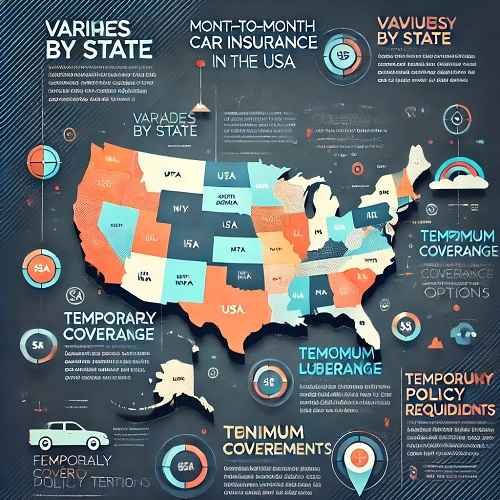
Month to month car insurance does not have one set of rules across the United States. In most states, major insurers usually sell standard auto policies for six months or one year, even when the customer pays monthly. A true policy written for only 30 days is uncommon. The state rules that matter most are minimum liability coverage, vehicle registration requirements, cancellation procedures, insurance verification, storage rules, and penalties for a lapse.
That difference matters if you plan to insure a car for only a few months. California requires insurance on vehicles operated or parked on public roads and lets an eligible owner file an Affidavit of Non Use before canceling coverage on a vehicle that will not be used. New York generally requires liability coverage for as long as a vehicle remains registered and tells owners to surrender plates before coverage ends if they will not replace it. Arizona has a formal process for temporarily insuring a vehicle that will not be driven. Pennsylvania may excuse a lapse of 30 days or less from its registration suspension rule if the owner proves the vehicle was not operated during the lapse.
So the safest way to shop for flexible car insurance is to treat “monthly” as a billing or short term need, then check the rules where the vehicle is registered. Do not cancel a policy just because you stop driving for a few weeks. Your state may require another step first.
For a basic explanation of the product itself, see month to month car insurance.
Is Month to Month Car Insurance a Special Policy Type?
Usually not.
Progressive says major insurers generally do not sell daily, weekly, or monthly auto policies. Standard policies are commonly issued for six months or one year. A driver with a short need may buy a normal policy and cancel it when the need ends, subject to the policy and state rules.
That makes the policy term different from the payment schedule.
A six month policy can be paid monthly. If you pay one installment, your contract does not automatically end after 30 days. The declarations page states the policy start and end dates.
State law then adds another layer. It can control:
- How much liability coverage you must carry
- Whether registered vehicles must stay insured
- How insurers report cancellations
- Whether plates must be surrendered
- Whether a stored vehicle can be taken off insurance
- What happens after a lapse
- How much notice an insurer must give before cancellation
- What proof you need to restore registration
Drivers should check both the insurance contract and state motor vehicle rules before ending coverage.
How Do State Rules Differ?
The table below shows why one national answer can be misleading. These are selected examples, not a substitute for checking your own state agency.
| State | Key current requirement | What matters for a monthly coverage plan |
| California | Minimum liability is 30/60/15 | Notify DMV before canceling if the registered vehicle will not be used, and use the available non use process when eligible |
| Florida | Registered vehicles generally need at least $10,000 PIP and $10,000 property damage liability | Florida places limits on policyholder cancellation during the first 60 days and reports required coverage cancellations to the state |
| New York | A registered vehicle generally must stay insured | Surrender plates before liability coverage ends if replacement coverage will not start |
| Texas | Minimum liability is 30/60/25 | A policyholder may cancel, and unused prepaid premium is generally refundable under state rules |
| Virginia | Minimum liability for policies effective in 2025 or later is 50/100/25 | If coverage ends during registration, reinsure, deactivate plates, or surrender plates |
| Arizona | Minimum liability is 25/50/15 | Arizona offers a formal de insurance process for a vehicle not being driven |
| Pennsylvania | Registered vehicles must maintain liability insurance | A short lapse can still trigger action, though a lapse of 30 days or less may avoid suspension if the vehicle was not driven |
| Illinois | Minimum liability is 25/50/20 | The state electronically verifies registered vehicle coverage and can suspend registration if coverage cannot be verified |
| New Jersey | Registered vehicles require liability, PIP, and uninsured motorist coverage | A lapse can lead to license or registration penalties |
| New Hampshire | The state does not generally require every driver to buy auto insurance | Drivers can still be personally liable and some drivers may be required to prove financial responsibility |
Sources for these rules include official motor vehicle and insurance agencies in each state.
What Are the Rules in California?
California requires financial responsibility for vehicles operated or parked on California roads. The current minimum liability limits for private passenger vehicles are $30,000 for injury or death to one person, $60,000 for injury or death to more than one person, and $15,000 for property damage.
California also electronically tracks insurance information. DMV says vehicle registration can be suspended when it is told a policy was canceled and replacement coverage is not submitted within 45 days.
A driver who wants to stop using a currently registered vehicle should not simply cancel the policy. California says an owner can notify DMV before cancellation and may file an Affidavit of Non Use if the vehicle will not be operated or parked on a California roadway.
This makes California a good example of why a short term insurance plan must be coordinated with registration status.
What Are the Rules in Florida?
Florida requires registered vehicles to carry personal injury protection and property damage liability coverage. State guidance identifies minimum amounts of $10,000 for PIP and $10,000 for property damage liability.
Florida also has a rule that can surprise drivers who plan to buy a policy and cancel it after one month. The Florida Department of Financial Services says a policyholder generally cannot cancel an automobile policy during the first 60 days unless the vehicle is destroyed, the vehicle is sold, or replacement insurance is obtained.
The state receives reports when required PIP or property damage liability coverage is canceled or not renewed. Florida law warns that failure to maintain required coverage may result in loss of registration and driving privileges.
A Florida driver should therefore confirm cancellation eligibility before assuming a six month policy can be ended after 30 days.
What Are the Rules in New York?
New York has strict rules tying insurance to vehicle registration.
New York DMV says a registered motor vehicle must generally remain covered by liability insurance even if it is stored or not being driven. If New York insurance will end and no replacement policy will begin, the owner should surrender the plates before the coverage ends.
A lapse can lead to registration suspension. For lapses of 90 days or less, an eligible owner may be able to pay a civil penalty instead of serving the registration suspension. The daily civil penalty rises as the lapse grows. If the lapse reaches 91 days or more, driver license suspension can also apply.
For someone who wants coverage for only one or two months, New York is a state where the end of the policy must be planned as carefully as the start.
What Are the Rules in Texas?
Texas requires at least 30/60/25 liability coverage. That means at least $30,000 for injuries to one person, up to $60,000 for injuries in one accident, and $25,000 for property damage.
Texas is more direct about early cancellation than some states. The Texas Department of Insurance says policyholders have the right to cancel an auto policy. It also says an insurer must refund unearned premium within 15 days after cancellation.
That can make a standard six month policy with monthly payments workable for someone who expects a short ownership period. Still, do not create a gap if the car remains in use.
A driver comparing flexible coverage with a regular policy can also read month to month versus traditional car insurance.
What Are the Rules in Virginia?
Virginia requires liability insurance on registered vehicles. For policies effective on or after January 1, 2025, minimum limits are 50/100/25. If coverage ends during the registration period, DMV says the owner must reinsure the vehicle, deactivate the plates, or permanently surrender them. Failure to comply can lead to suspension of driving and registration privileges.
What Are the Rules in Arizona?
Arizona requires 25/50/15 liability insurance for vehicles driven on state roads. The state also has a formal de insurance process for a vehicle that will not be driven. Its registration is not valid for road use until insurance becomes active again and the insurer reports it.
That option can help seasonal residents or drivers storing a car for several months.
What Are the Rules in Pennsylvania?
Pennsylvania requires liability insurance on currently registered vehicles. A lapse generally leads to a three month registration suspension, but a lapse of 30 days or less may avoid that suspension if the owner proves the vehicle was not operated.
PennDOT also says owners who cancel insurance and will not replace it must return the registration plate and card within 30 days of cancellation.
What Makes New Hampshire Different?
New Hampshire does not have a general law requiring every driver to buy auto insurance. An uninsured driver can still be personally responsible for damage and medical bills after a crash, and some drivers can be required to show financial responsibility.
A monthly payment plan in New Hampshire can still belong to a longer insurance policy.
Does Paying Monthly Change State Minimum Coverage?
No. Monthly billing changes how the premium is paid. It does not reduce legal minimum limits or remove required coverage.
A California driver using an insurance policy for financial responsibility still needs at least 30/60/15 liability. Texas requires 30/60/25, and Virginia requires 50/100/25 for policies effective in 2025 or later. Florida registered vehicles still need required PIP and property damage liability coverage.
A lender can also require vehicle damage protection on a financed or leased car. Compare monthly quotes using the same limits, deductibles, drivers, vehicle, and mileage.
Why Do Lapses Matter So Much?
A lapse is a period when required insurance is not active.
The Insurance Research Council estimated that 15.4 percent of U.S. motorists were uninsured in 2023, or more than one in seven drivers. The rate varied widely by state.
States use tools such as electronic insurer reporting, registration checks, civil penalties, plate surrender rules, and license suspension to enforce insurance laws.
A driver who wants flexible coverage should therefore avoid this pattern:
- Buy a standard policy.
- Pay for one month.
- Stop payment without formally canceling.
- Keep the car registered.
- Drive again before new insurance starts.
That can create both a policy lapse and a state compliance problem.
Can You Pause Car Insurance Instead of Canceling It?
Sometimes a state or insurer offers another route, but there is no national pause rule.
Arizona allows an eligible owner to insure a vehicle that will not be driven. California offers an Affidavit of Non Use process for certain currently registered vehicles. New York generally expects plates to be surrendered if insurance will end while the vehicle would otherwise remain registered.
The safest sequence is:
- Ask the insurer what coverage can be reduced or canceled.
- Ask the state motor vehicle agency what must happen to the registration or plates.
- Check lender requirements.
- Complete the state step before the policy ends when required.
- Restore insurance before driving again.
You can also review can you pause car insurance if the vehicle will be stored.
What Should You Ask Before Buying Month to Month Coverage?
Before paying, confirm:
- Is this a 30 day policy or a longer policy billed monthly?
- Can I cancel after one month?
- How is unused premium refunded?
- What happens if payment is late?
- Does the insurer report cancellation to the state?
- Must I change registration or surrender plates first?
- Can the vehicle use a state approved non use status?
- What coverage does my lender require?
Get the effective date and cancellation date in writing.
Frequently Asked Questions
Paying a standard auto policy monthly is widely available, but true 30 day policies are uncommon with major insurers. State law controls required coverage, registration, cancellation, and lapse rules. Check the state where the vehicle is registered before ending coverage.
There is no official national ranking. New York is strict about keeping registered vehicles insured and generally requires plate surrender before coverage ends if replacement insurance will not start. California, Virginia, Pennsylvania, and other states also connect insurance status to registration.
It depends on the state. Arizona has a formal de insurance process. California has an Affidavit of Non Use option for eligible vehicles. New York generally requires plate surrender if liability coverage ends while the vehicle would otherwise remain registered.
Often, but state and insurer rules matter. Texas allows policyholders to cancel and requires return of unearned premium under its rules. Florida restricts policyholder cancellation during the first 60 days except in specified situations such as sale, destruction, or replacement coverage.
Yes, as long as the underlying policy remains active without a gap. Missing an installment can lead to cancellation after applicable notice. The exact process varies by state and insurer.
Start the replacement policy before the old policy ends. Keep proof of both effective dates. States that electronically track coverage may receive cancellation and new policy records from insurers, so even a one day gap can create a compliance issue.
Final Takeaway
Month to month car insurance rules are mainly state insurance and registration rules applied to a driver who wants flexible coverage. Major insurers usually sell longer policies, even when premium is paid monthly, so the safest approach is to check what happens when that policy ends.
California, Arizona, and some other states provide formal options for vehicles that will not be driven. New York ties insurance closely to active registration and plate status. Pennsylvania has a limited rule for short lapses when the vehicle was not operated. Florida places a special restriction on policyholder cancellation during the first 60 days. Texas gives policyholders a clear right to cancel while still requiring legal liability coverage for vehicles on the road.
Before canceling, check your state motor vehicle agency, insurer, registration status, and lender requirements. If you are comparing flexible payment options, Alias Insurance can help you review car insurance quotes from multiple providers while you compare the policy term, monthly payment, coverage limits, and cancellation rules that apply in your state.
References and Sources
- California DMV Insurance Requirements
- Florida Department of Financial Services Personal Automobile Insurance Overview
- New York DMV Auto Liability Insurance
- Texas Department of Insurance Auto Insurance Guide
- Virginia DMV Insurance Requirements
- Arizona MVD Insurance Information and Requirements
- Pennsylvania Insurance Overview
- Illinois Secretary of State Mandatory Insurance
- New Jersey MVC Insurance Requirements
- New Hampshire DMV Driver Manual
- Progressive Temporary Car Insurance
- Triple I Uninsured Motorist Statistics