
Written by licensed insurance agent Andy walker
Reviewed by the Alias Insurance editorial team.
Weekly car insurance sounds simple: buy coverage for seven days, drive, and let it end. In the United States, the reality is different. Major auto insurers generally sell policies for six months or one year rather than a true seven day policy. Allstate and Progressive both say daily or weekly auto insurance is not normally offered by major insurers. They point drivers toward other legal choices, such as a standard policy that can later be canceled, rental car coverage, non owner insurance, permissive use, or being added to the vehicle owner’s policy.
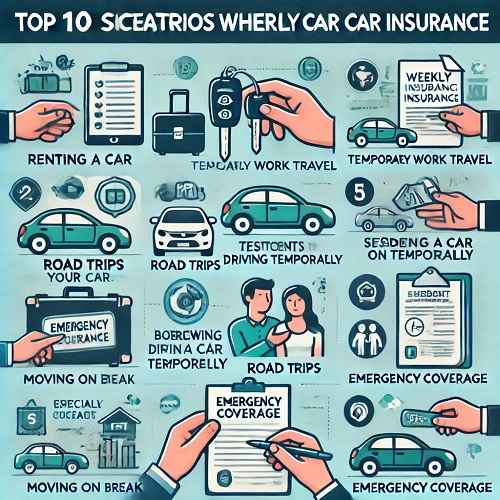
So when does weekly car insurance make sense? It is most useful as a way to describe a short coverage need, not as the name of one standard insurance product. A one week need can arise when you rent a car, borrow a relative’s vehicle, return home from college, visit the United States, own a car briefly, use a shared car, or need transportation while your own car is unavailable.
The right option depends on who owns the vehicle, how often you drive it, why you are driving it, and what state law requires. The NAIC says each state has its own auto insurance rules and most states require at least a basic level of coverage.
For a basic explanation of your choices, see weekly car insurance.
What Does Weekly Car Insurance Mean in the USA?
The phrase usually describes a driver who needs auto coverage for about seven days. It does not always describe a policy written for exactly seven days.
Allstate says short term auto insurance is not typically offered in the United States. Progressive gives similar guidance and says major insurers commonly sell six month or yearly policies.
A driver can therefore have a one week insurance need without buying a one week policy.
Possible solutions include rental company protection, permissive use, a temporary driver addition, non owner insurance, a standard policy that is later canceled, or coverage tied to a car sharing reservation.
Which Short Coverage Option Fits Each Situation?
| Situation | A common coverage route | Main question to ask |
| One week rental | Existing auto policy or rental company protection | Does my current policy extend to the rental? |
| Borrowed family car | Owner policy or listed driver status | Does permissive use apply to me? |
| College break | Family policy if allowed | Am I already listed and covered? |
| U.S. visitor | Rental coverage or another approved policy | Is my license valid in this state? |
| Short vehicle ownership | Standard policy with later cancellation | What are the cancellation rules? |
| Shared car booking | Platform coverage plus personal protection if applicable | What damage am I responsible for? |
| Car in the shop | Existing policy and rental related coverage | Is the rental tied to a covered loss? |
| Short road trip | Existing policy or rental coverage | Are all drivers covered? |
| Occasional driving | Non owner or mileage based coverage | How often will I drive? |
| Temporary work use | Business or rideshare coverage if required | Does personal insurance exclude this use? |
Policy language and state law control the actual coverage.
Scenario 1: You Rent a Car for a One Week Vacation
A seven day rental is one of the clearest cases where a driver needs protection for about one week.
If you already have personal auto insurance, some of your coverage may extend to a rental car. Liberty Mutual says personal auto coverage will typically extend to a rental, but the exact protection depends on the policy. Allstate also advises drivers to review their policy before buying rental company coverage because some protection may overlap.
Ask about liability limits, vehicle damage, deductibles, exclusions, and the country where you will drive. If you have no personal auto policy, review the rental company’s protection.
Also confirm that every person who plans to drive appears on the rental agreement. A second driver who is not authorized under the rental contract can create problems even if another insurance policy might otherwise provide some protection.
A credit card may offer a rental benefit, but that benefit can have limits. Check whether it covers vehicle damage, whether it is primary or secondary, and which vehicle types or rental periods it excludes before depending on it.
Scenario 2: You Borrow a Friend or Relative's Car for a Week
GEICO explains that permissive use may apply when a person who is not listed on a policy drives an insured vehicle with the owner’s permission. Coverage depends on the policy and state law. GEICO also says regular or household drivers should generally be listed rather than treated as occasional drivers.
If you plan to drive the borrowed car each day for a week, ask the owner’s insurer whether you should be added. Check liability limits, vehicle damage, deductibles, exclusions, and household driver rules.
How often you use the car matters. Borrowing a friend’s vehicle once for an afternoon is different from driving the same car to work every day.
The owner should also check whether you are specifically excluded from the policy. An excluded driver may have no protection under that policy even if the owner gives permission.
Do not assume that the phrase “insurance follows the car” settles every question. Policy terms, driver status, state law, and the reason for using the vehicle can change the answer.
Scenario 3: A College Student Drives During School Break
A college student may return home for spring break, Thanksgiving, winter break, or another short period and drive a family vehicle.
The first question is whether the student is already covered under the family policy. The NAIC says families should tell the insurer where a college student’s car is stored if that location differs from the policy address. It also notes that a student may be able to stay on a parent’s policy when the parent owns the car.
A student who is still listed on the family policy may not need separate short coverage simply because the car will be driven for one week.
The family should still contact the insurer if the student’s status changed during the school year. For example, the student may have been listed as living away from home without access to a vehicle.
Also tell the insurer if the student brings a different vehicle home, buys a car, or becomes the titled owner of a vehicle.
Scenario 4: You Visit the United States for a Short Stay
Visitors may need a car for only a few days or one week.
Progressive says a person with a valid international driver’s license may be able to buy U.S. insurance if the license is valid in the state where the person will drive. It also says rental company coverage is often the simplest choice for a short term visitor renting a vehicle.
Confirm that your license is accepted, every driver is listed, required liability protection is active, and you understand any damage waiver.
State rules for foreign licenses and international driving permits vary. Rental companies may also have their own rules for age, license history, payment method, and additional drivers.
A traveler visiting for seven days has a different need from someone moving to the United States for several months. A longer stay may require a standard auto policy rather than rental based protection.
Check the exact state where you will drive instead of assuming one rule applies across the country.
Scenario 5: You Own a Car for Only a Short Period
Some drivers buy a vehicle for a temporary move, a short project, or resale.
Progressive says a vehicle owner can buy a standard policy and cancel when the temporary driving need ends, though cancellation fees or other terms may apply.
If the car is financed, the lender may require collision coverage and protection for theft, fire, weather, and other vehicle losses. The NAIC confirms that lenders can require additional protection beyond state minimum liability rules.
Do not treat a short ownership period as permission to drive uninsured.
Ask the insurer what happens if you cancel before the normal policy term ends. Check whether you receive money back for unused coverage, whether a fee applies, and what date the cancellation becomes effective.
Keep coverage active until you no longer own or drive the vehicle and have satisfied any registration or lender requirements that apply in your state.
Scenario 6: You Book a Peer To Peer Car for One Week
A one week car sharing booking may look like a standard rental, but the rules can differ.
Turo says U.S. trips include liability insurance or legal liability protection. It also offers optional protection plans that may limit a guest’s financial responsibility for eligible vehicle damage. Turo states that these protection plans are contracts and are not insurance.
Ask your insurer whether your policy applies to the booking. Turo tells guests with personal insurance to confirm whether their own insurer covers peer to peer car sharing.
Check how much you could owe if the shared vehicle is damaged. Also check liability limits, excluded damage, fees, and whether the protection is primary or secondary to other insurance.
For more detail, see weekly car insurance for shared cars and peer to peer rentals.
Scenario 7: Your Car Is Being Repaired After a Covered Loss
If your insured car is damaged in a covered event and will be in the repair shop for a week, you may need temporary transportation. That does not normally require a new weekly policy.
State Farm says rental reimbursement can help pay for temporary transportation when an insured vehicle cannot be driven because of a covered loss, subject to policy limits. It also separates rental reimbursement from coverage that protects the rental vehicle itself.
Check the daily limit, total claim limit, deductible, and whether your auto coverage extends to the rental. Routine maintenance may not qualify.
For example, a rental needed because your insured car was damaged in a covered crash may qualify for reimbursement if you bought that benefit. A rental needed because your car is receiving an oil change normally would not qualify under the same rule.
Read the declarations page or call the insurer before renting.
Scenario 8: You Need a Car for a One Week Road Trip
A road trip creates a short driving need, but the right insurance depends on whose car you take.
If you drive your own insured car, keep your existing policy. If you rent, check your personal policy and the rental company’s options. If you borrow a car, confirm permissive use and whether all planned drivers are covered.
Before leaving, check liability limits, rental rules, deductibles, and whether coverage applies throughout your route.
Also ask whether roadside assistance is included if that protection matters to you. Roadside assistance is different from liability or vehicle damage coverage and may have separate limits.
Travel outside the United States can create another set of rules. Do not assume a U.S. policy applies in another country without confirming it first.
See weekly car insurance for road trips for more trip focused guidance.
Scenario 9: You Do Not Own a Car but Drive Occasionally
The NAIC says drivers who do not own a car but drive occasionally may consider non owner liability insurance. Such a policy may provide liability and selected additional protection, but it generally does not pay for damage to the car being driven.
GEICO also describes non owner insurance as liability protection for people who drive but do not own a vehicle.
A non owner policy is not normally written for one week, but it may fit if you rent or borrow cars several times each year.
For example, someone who rents a car once every few months may have a different need from a person renting one vehicle for a single seven day vacation.
If you regularly drive a car owned by someone in your household, ask whether you should be listed on that vehicle’s policy instead.
Drivers with low annual mileage can also compare pay as you go car insurance.
Scenario 10: You Drive for Paid Work for One Week
A driver may plan to make deliveries, carry passengers, or use a vehicle for paid work for only a short period.
Do not assume a personal policy covers the activity because it lasts seven days. The NAIC says personal auto insurance usually does not cover business vehicle use in the same way as business auto insurance. It also says coverage gaps can arise for rideshare drivers because personal policies often exclude driving for hire.
Ask the platform and insurer exactly when each policy applies. You may need a rideshare endorsement, business auto coverage, or another approved option.
Pay attention to when coverage starts and stops. Rideshare protection may differ while an app is off, while you are waiting for a request, while traveling to pick up a passenger, and while a passenger is in the vehicle.
A seven day work period does not turn business driving into ordinary personal use.
When Is Weekly Car Insurance Not the Right Choice?
A short coverage approach is usually a poor fit when you own and drive the vehicle year round, use the same borrowed car regularly, finance or lease the vehicle, or use the car for ongoing paid work.
It may also be unnecessary when an existing policy already covers the situation.
Be cautious with websites that advertise instant seven day insurance without clear insurer information. Allstate and Progressive both warn that major insurers do not normally sell daily or weekly policies and advise caution with unfamiliar offers.
Verify the insurer through your state insurance department before paying. Confirm the company name, license status, policy term, coverage limits, exclusions, effective date, and cancellation rules.
A page that accepts payment does not by itself prove that valid insurance is active.
What Coverage Should You Check for a One Week Driving Need?
The NAIC says auto insurance may include liability, medical payments, uninsured driver protection, and protection for damage to the insured vehicle. State requirements differ.
For a temporary driving situation, check liability limits, required injury coverage, uninsured driver protection where applicable, collision coverage if needed, protection for theft and weather losses, deductibles, excluded drivers, business use exclusions, and rental or shared vehicle rules.
Ask which protection applies to you as the driver and which protection applies to the vehicle.
Also check whether the policy has a territory limit. Coverage that works throughout the United States may not work the same way after crossing an international border.
A low price can be misleading if the policy leaves out protection you expected.
How Do You Compare Short Term Coverage Safely?
Start with the vehicle. Ask who owns it, who insures it, who will drive, and how it will be used. Compare quotes using the same liability limits, vehicle protection, deductibles, and drivers.
The NAIC advises consumers to compare matching limits and deductibles. It also warns that some websites can provide coverage immediately while others cannot, even after payment.
Confirm the insurer, effective date and time, vehicle, listed drivers, and proof of insurance before driving.
Do not compare only the price for seven days. Compare what you would owe after a claim, which drivers are covered, and whether the policy actually fits the vehicle you will use.
What Information Should You Have Ready?
A short driving period does not remove the normal information an insurer may need. Having accurate details ready can also reduce the chance of a quote changing later.
Prepare:
- Driver license information for each person who may drive
- Vehicle identification number when you own or are buying the car
- Garaging address
- Expected use of the vehicle
- Current insurance information, if any
- Dates you expect to need the vehicle
- Ownership, rental, or borrowing details
- Lender information if the vehicle is financed
The NAIC advises consumers to disclose all drivers and provide accurate information when requesting auto insurance quotes. Missing a household driver or giving incorrect information can affect pricing and may create policy problems later.
Do not use a false address, omit a regular driver, or describe business driving as personal use to get a lower price.
Should You Cancel Coverage as Soon as the Week Ends?
Only cancel after the need for coverage has actually ended.
If you own the vehicle, make sure you will not drive it again after the cancellation date. Check registration rules in your state and any lender requirements before ending coverage.
If you expect to drive another vehicle soon, ask whether keeping continuous insurance or using non owner coverage makes more sense.
Progressive warns that driving during a coverage lapse can lead to legal consequences and may also affect future insurance costs.
Get the cancellation date and any refund or fee information in writing. Keep proof showing when the policy ended.
Frequently Asked Questions
Major insurers generally do not sell true one week auto policies. Allstate and Progressive say standard insurers usually write longer terms, often six months or a year. A one week need may instead be handled through rental coverage, permissive use, a temporary driver addition, non owner insurance, or a standard policy that is later canceled.
A policy must come from an insurer authorized to sell coverage in the state and must meet applicable legal requirements. The phrase weekly car insurance does not prove that a product is valid or sufficient. Verify the company with your state insurance department and read the policy before paying.
You may not need a separate policy. The vehicle owner’s policy may cover an occasional permitted driver, depending on policy terms and state law. GEICO says regular or household drivers should generally be listed. Ask the owner’s insurer before using the car for several days.
Not always. Personal auto insurance may extend to a rental, but limits and exclusions vary. The rental company may also offer liability protection and damage waivers. Check your insurer, rental agreement, and any credit card rental benefit before deciding.
Some insurers allow a standard policy to be canceled when coverage is no longer needed. Progressive and Allstate discuss this as an option for temporary needs. Ask about cancellation fees, refund rules, minimum charges, and the exact date coverage ends before buying.
Non owner insurance can fit someone who does not own a car but regularly rents or borrows vehicles. It is not normally written as a seven day policy. If you need a car only once for one week, rental coverage or the owner’s policy may be simpler, depending on the situation.
Final Takeaway
Weekly car insurance is most useful as a search term for a short driving need, not as a standard seven day policy sold by major U.S. insurers. The correct choice changes depending on whether you own, borrow, rent, share, or use the vehicle for paid work.
For a rental, your existing policy or rental company protection may be enough. For a borrowed car, permissive use or temporary driver status may apply. Non owner insurance may fit repeated borrowing or renting. A vehicle owner may need a standard policy even if ownership lasts only a short time.
Insurance laws and policy terms vary by state and company. Check with a licensed insurer and your state insurance department before relying on short term coverage.
If you need to compare options for a temporary driving situation, Alias Insurance can help you review car insurance quotes and coverage choices from multiple providers before deciding what fits your one week driving need.
References and Sources
- Allstate: Temporary Car Insurance
- Progressive: Temporary Car Insurance
- Progressive: Insurance for International Drivers
- NAIC: Auto Insurance
- NAIC: Consumer Auto Insurance Guide
- NAIC: Insurance and Car Sharing
- GEICO: Permissive Use Car Insurance
- GEICO: Non Owner Car Insurance
- Liberty Mutual: Rental Car Insurance
- State Farm: Rental Reimbursement Coverage
- Turo: U.S. Guest Protection Plans
Related Articles