
Written by licensed insurance agent Andy walker
Reviewed by the Alias Insurance editorial team.
Month to month car insurance may save you money if you need a vehicle for only a short period, plan to sell a car soon, drive far fewer miles than average, store a seasonal vehicle, or expect your insurance needs to change within a few months. The savings do not come simply from paying a bill every month.
Most major U.S. insurers do not sell true 30 day auto insurance policies. Standard personal auto policies are generally issued for six months or one year, even if you choose monthly payments. Progressive says a driver with a temporary need can often buy a normal policy and cancel it after the driving need ends. Triple I also says personal auto policies are generally written for six month or one year terms.
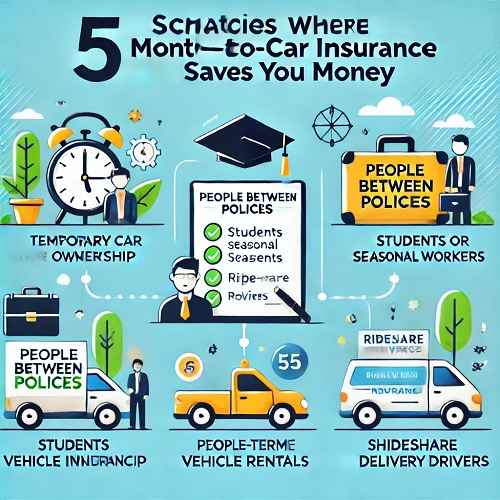
Five situations are most worth checking:
- You expect to sell or transfer the car soon.
- You keep a vehicle in storage for part of the year.
- You drive a few miles and qualify for mileage based pricing.
- You need a vehicle during a short life change, such as a temporary job or school period.
- You expect to switch insurers after comparing a better price for the same protection.
Monthly billing itself may cost more because an insurer can charge installment fees or offer a discount for paying the full premium. The right comparison is the total amount you will pay for the period you actually need insurance.
Drivers should also avoid creating a coverage lapse. The Insurance Research Council estimated that 15.4 percent of U.S. motorists were uninsured in 2023. State registration and insurance rules can make even a short uninsured period costly.
For a basic explanation of flexible coverage, read month to month car insurance.
What Does Month to Month Car Insurance Mean?
The phrase is often misunderstood.
A driver may see a monthly payment and assume the policy lasts for only one month. That is usually not how standard auto insurance works.
Progressive says major insurers typically sell six month or annual policies rather than daily, weekly, or monthly policies. Allstate gives similar guidance and says short term auto insurance is not typically offered by major U.S. insurers.
A driver may therefore have:
- A six month policy paid through monthly installments
- A yearly policy paid through monthly installments
- A standard policy that is canceled after a short ownership period
- Mileage based insurance with a bill that changes according to miles driven
- Another form of temporary protection when the driver does not own the car
The important question is not whether the bill arrives every month. Ask how long the insurance contract lasts and how much you will owe before the policy ends.
Does Paying Monthly Automatically Save Money?
No.
Monthly billing often helps with cash flow, but it does not automatically reduce your insurance premium.
A driver may pay more over the full policy term if the insurer charges installment fees or gives a discount for paying the premium upfront.
Suppose a six month policy costs $900 when paid in full. If monthly billing totals $930 after fees, paying monthly costs $30 more over the term.
That example is only for illustration. Actual prices and fees differ by insurer and state.
Monthly payments become more useful when your need for insurance is likely to end before the normal policy term does. In that case, you may avoid tying up a larger amount of money in prepaid premium.
Progressive says customers who pay premiums in advance may receive a refund for unused premium after cancellation. Drivers paying monthly may receive little or no refund if cancellation falls near the end of a billing period. Cancellation fees can also apply.
Scenario 1: You Plan to Sell Your Car Within a Few Months
This is one of the clearest cases where monthly billing can make practical sense.
Suppose you own a car but expect to sell it in two or three months. You still need legal insurance while you own and drive it, but paying a full six month premium upfront may tie up money that you will later need refunded.
Instead, you could compare a standard policy with monthly payments and then cancel after the vehicle is sold.
Progressive specifically says drivers with temporary vehicle ownership can buy a six month policy and cancel it when they are finished driving. It says drivers generally will not be charged for the remaining months after cancellation, though a fee may apply.
How could this save money?
The savings come from ending coverage when the insurance need ends.
Consider this example.
A driver buys a used car while waiting for a new vehicle to arrive. The old car will probably be sold after three months.
Instead of keeping insurance on the temporary car for six months, the driver insures it while it is actually owned and then removes or cancels coverage at the proper time.
That can prevent paying for months when the car is no longer owned.
Do not cancel too early
Keep the car insured until the sale is complete and you no longer drive it.
If you are replacing it with another vehicle, ask the insurer whether the new car can be added to the existing policy instead of canceling the entire policy.
Progressive advises drivers selling one vehicle and purchasing another to maintain coverage because most states require auto insurance.
Check the refund rules
Ask:
- Will unused premium be refunded?
- Is there a cancellation fee?
- What date does coverage officially end?
- Do I need to return plates or change registration?
- Will I immediately insure another vehicle?
State rules vary, so verify the process before canceling.
Scenario 2: You Store a Seasonal Vehicle for Several Months
Some vehicles are driven for only part of the year.
Examples include:
- Convertibles used mainly in warm weather
- Cars owned by seasonal residents
- Second vehicles used only during summer
- Vehicles stored while the owner travels for several months
- Cars parked while a student lives away from home
Paying full driving coverage throughout the storage period may not always be necessary, depending on state rules, lender requirements, and insurer options.
Allstate says a driver may realize short term savings by canceling coverage while a car is stored, but it also warns that cancellation creates drawbacks. Reducing coverage may be a better option in some cases.
Progressive advises owners to check registration rules before canceling insurance on a stored car. A state may require registration to be canceled first, plates to be surrendered, or an affidavit showing the vehicle is not being used.
Why reducing coverage can be better than canceling
A parked car can still be damaged.
Fire, theft, vandalism, falling trees, hail, flood, or another event can occur while the car is not being driven.
Ask whether your insurer allows you to reduce driving related protection while retaining coverage for certain non driving losses.
Do not assume this is allowed everywhere.
Financed and leased cars create another concern because the lender may require vehicle damage protection even when you are not driving.
Example
A snowbird owns a second vehicle and leaves it parked for five months each year.
Instead of paying the same driving related insurance throughout the storage period, the owner asks the insurer and state motor vehicle agency whether coverage can be reduced legally while the car is stored.
If allowed, that can reduce insurance spending without leaving the vehicle completely unprotected.
For a closer look at rules that differ across the country, see state rules for month to month car insurance.
Scenario 3: You Drive Far Fewer Miles Than Most Drivers
Drivers who rarely use their cars should compare mileage based insurance before assuming a standard monthly policy is their cheapest option.
Common low mileage drivers include:
- People who work from home
- Retirees
- Students living near campus
- People who use public transportation for most trips
- Owners of second vehicles
- Drivers with short commutes
Nationwide describes SmartMiles as pay per mile insurance for low mileage drivers. Its premium includes a base amount and a variable amount based on miles driven. The company says the variable portion changes with mileage from one billing period to another. Availability varies by state.
Allstate also says pay per mile insurance charges a base amount plus a mileage charge and can cost less for low mileage drivers, while frequent drivers may pay more.
How can mileage based insurance save money?
Traditional insurance considers mileage as one rating factor, but your premium does not normally fall every month simply because your car stayed parked.
A pay per mile plan directly links part of the cost to actual mileage.
Suppose you previously drove to work five days each week but now work from home. If your annual mileage drops sharply, a mileage based policy could cost less than a standard policy.
That does not guarantee savings.
You need to compare:
- Base premium
- Per mile charge
- Expected monthly mileage
- Driving behavior factors, if any
- Coverage limits
- Deductibles
- State availability
- Device or app requirements
Nationwide says SmartMiles is not available in every state and actual savings vary according to rating factors, coverage, mileage, and other policy details.
Learn more about pay per mile car insurance if low mileage is the main reason you are considering flexible insurance.
Scenario 4: You Need a Car During a Short Life Change
Insurance needs can change quickly.
A person may temporarily need a car because of:
- A three month work assignment
- A college semester
- A temporary move
- A family caregiving responsibility
- A short period between permanent vehicles
- A temporary return to the United States
Buying a standard policy with monthly payments may fit if you own the vehicle during this period and intend to stop driving or sell it afterward.
The benefit is not that the insurer sells a special monthly contract. The benefit is the ability to maintain legal coverage while your need exists and then cancel or change the policy when the situation ends.
Allstate says major insurers generally do not offer true short term auto insurance and suggests a standard policy, non owner coverage, being added to someone else’s policy, or protection connected to the vehicle being borrowed or rented, depending on the situation.
Ownership changes the answer
If you own the vehicle, a standard policy may be appropriate.
If you borrow someone else’s vehicle, the owner’s policy may already provide some protection, depending on policy terms and the driver.
If you rent a vehicle, rental company protection and your existing personal insurance may be relevant.
If you regularly drive vehicles you do not own, non owner insurance may fit better than buying owner coverage.
Progressive says non owner insurance can provide liability protection for drivers who do not own a car and is generally less expensive than standard owner insurance. It also says non owner policies are normally sold for six months or a year rather than one month.
For a broader look at short driving needs, see temporary car insurance.
Scenario 5: You Find a Better Comparable Rate Before Renewal
You do not always have to wait until a six month policy expires to switch insurers.
This matters if your premium rises or another licensed insurer offers comparable protection for less.
Progressive says drivers can change insurance companies before the end of their current policy. It advises purchasing the replacement policy before canceling the old one and says unused premium may be refunded, subject to applicable cancellation fees.
Example
Suppose your current insurer renews your policy at a price you can afford, but two months later you compare several insurers and find another policy that costs less while maintaining the same limits and deductibles.
You may be able to switch instead of waiting another four months.
The savings would come from the lower comparable premium, not from the monthly payment itself.
Compare identical protection
Keep these details the same:
- Bodily injury liability limits
- Property damage liability limits
- Uninsured driver protection
- Medical coverage where applicable
- Collision coverage
- Vehicle protection for theft and weather losses
- Deductibles
- Drivers
- Annual mileage
- Garaging address
- Optional benefits
A lower quote is not a saving if it provides less protection.
For a fuller comparison of payment and policy structures, read month to month versus traditional car insurance.
When Can Month to Month Payments Cost You More?
Monthly billing can cost more when you plan to keep the policy for the full term and the insurer charges installment fees or offers savings for paying upfront.
It can also cost more indirectly if you repeatedly cancel and restart coverage.
A lapse can create:
- State penalties
- Registration problems
- Higher future premiums with some insurers
- Lack of protection after a crash
- Possible lender problems
The Insurance Research Council estimated that 15.4 percent of U.S. motorists were uninsured in 2023. More than one in seven drivers therefore lacked liability insurance, despite near universal state financial responsibility requirements.
Avoid joining that group simply to reduce one month’s expense.
How Do You Know if Flexible Insurance Will Save You Money?
Start with the total cost.
Do not compare a $100 monthly payment with a $550 six month payment and assume the first option costs less.
Calculate what you expect to pay during the exact period you need the policy.
Example 1: Full term driver
Six month paid in full premium: $900
Monthly billing total: $930
Expected ownership: Six months
In this example, paying in full costs less.
Example 2: Short ownership
Six month premium: $900
Expected ownership: Two months
Cancellation allowed after sale: Yes
A driver who pays monthly and properly cancels after selling the car may avoid paying for later months. A driver who prepaid may receive unused premium back, subject to the insurer’s refund rules.
The financial result depends on fees and cancellation terms.
Example 3: Low mileage driver
Standard policy: Fixed premium
Mileage based policy: Base amount plus mileage charge
Expected mileage: 300 miles per month
Here the driver should calculate the estimated mileage based cost rather than automatically choosing either policy.
What Costs Should You Compare?
Before buying, ask for these numbers:
- Full six month or annual premium
- Monthly installment amount
- First payment amount
- Installment fees
- Pay in full discount
- Cancellation fee
- Refund method
- Mileage charge if using mileage based insurance
- Deductibles
- Total expected cost for the months you expect to keep the car
The cheapest monthly bill may not produce the cheapest policy.
What Coverage Should You Keep?
Cost should not be the only factor.
Most states require liability insurance or another form of financial responsibility. State rules vary.
You may also need:
- Collision coverage
- Protection for theft, fire, hail, flood, and vandalism
- Uninsured driver coverage
- Underinsured driver coverage
- Personal injury protection
- Medical payments coverage
- Rental reimbursement
- Roadside assistance
A financed or leased vehicle may require more protection than state minimum insurance.
Do not remove required coverage simply because you expect to own the vehicle for only a few months.
Why Should You Avoid a Coverage Lapse?
A lapse occurs when one policy ends before another starts or when required coverage stops while you still need it.
Progressive warns that a lapse can result in legal consequences if you drive uninsured and may contribute to higher future rates. It recommends starting replacement coverage before canceling the old policy.
State rules can also connect insurance directly to registration.
Some states require owners to return plates, cancel registration, or complete another state process before ending insurance on a stored car.
Check your state’s department of insurance and motor vehicle agency before canceling.
What Should You Ask an Insurer Before Buying?
Ask these questions before choosing monthly payments or a policy that you expect to cancel early:
- What is the actual policy term?
- Can I pay monthly?
- Is there an installment fee?
- Do I lose a discount by not paying in full?
- Can I cancel before renewal?
- Is there a cancellation fee?
- How is unused premium refunded?
- Does my state require another step before cancellation?
- Can I reduce coverage while the vehicle is stored?
- Does my lender require collision and other vehicle protection?
- Is mileage based insurance available?
- When does replacement coverage need to start?
Get the important terms in writing.
Frequently Asked Questions
It can in certain situations, but monthly billing alone does not guarantee savings. A driver may save by canceling a standard policy after selling a car, reducing permitted coverage while a vehicle is stored, switching to a cheaper comparable insurer, or choosing mileage based insurance when driving few miles. Monthly installment fees can make a policy cost more.
True one month auto policies are uncommon among major U.S. insurers. Progressive and Allstate say standard policies usually last six months or one year. Drivers with short needs may buy a normal policy and cancel it later or use another type of coverage suited to the vehicle.
Many insurers allow policyholders to cancel before the end of the policy term. Refunds and fees depend on the insurer and state. Progressive says prepaid unused premium may be refunded after cancellation. Start replacement insurance first if you will continue driving.
Monthly billing by itself is not cheaper because you drive less. A mileage based policy may be worth comparing. Nationwide and Allstate both offer mileage based products that connect part of the premium to miles driven, although eligibility and state availability vary.
Not without checking first. Allstate warns that canceling coverage creates an insurance gap and leaves the stored vehicle without protection from covered damage. Progressive advises drivers to check state registration rules before canceling coverage on a stored vehicle. A reduced coverage option may fit better where allowed.
Yes, drivers can often switch before renewal. Progressive says a policyholder does not need to wait until the current policy expires. Buy the new policy first and then cancel the old coverage so there is no gap.
Final Takeaway
Month to month car insurance may save money when your driving need is temporary, but the payment schedule itself is not the source of the savings.
The strongest cases are short vehicle ownership, seasonal storage, low mileage driving, temporary life changes, and switching to a less expensive policy with comparable protection.
Check the total premium before choosing monthly billing. Installment fees can make monthly payments cost more than paying upfront. If you plan to cancel early, review refund and cancellation rules before buying.
State insurance and registration laws vary, so verify the requirements where your vehicle is registered. Never create an uninsured gap simply to reduce one month’s expense.
Drivers comparing flexible payment choices can use Alias Insurance to review car insurance quotes from multiple providers and compare premiums, deductibles, coverage limits, mileage options, and policy terms before making a decision.
References and Sources
- Progressive Temporary Car Insurance
- Progressive Car Insurance Refund Guide
- Progressive How to Switch Car Insurance Companies
- Progressive Insurance for a Car in Storage
- Allstate Temporary Car Insurance
- Allstate Insurance for a Car in Storage
- Allstate Pay Per Mile Car Insurance
- Nationwide SmartMiles Pay Per Mile Insurance
- Triple I What Is Auto Insurance
- Insurance Research Council Uninsured and Underinsured Motorists