
Written by licensed insurance agent Andy walker
Reviewed by the Alias Insurance editorial team.
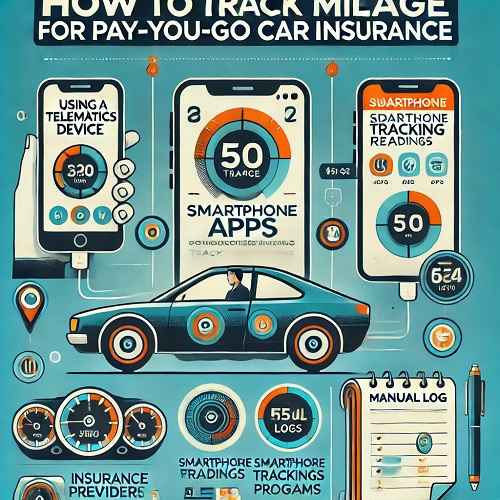
Pay as you go car insurance usually tracks mileage through a mobile app, a plug in device connected to your car, built in car technology, or periodic odometer readings. The exact method depends on the company and the program offered in your state.
To track mileage well, confirm the required tracking method, save your starting odometer reading, complete the app or device setup, check that your first trips appear, and compare the company’s mileage record with your odometer each month. Report missing, duplicate, or incorrect trips as soon as you find them.
Mileage matters because some policies connect part of your cost directly to how much you drive. A true pay per mile plan may charge a fixed base amount plus a charge for each mile. Other usage based programs may consider mileage together with braking, acceleration, speed, or time of day. The National Association of Insurance Commissioners says usage based insurance can collect mileage and other driving data through tracking devices or smartphone technology.
Federal Highway Administration data for 2024 shows that U.S. motor vehicles traveled about 3.294 trillion miles and averaged 11,071 miles per registered motor vehicle. The table was updated in February 2026. Your company may use a different low mileage threshold, so use your own driving record and the policy rules when deciding whether mileage based coverage fits you.
What does mileage tracking mean in pay as you go insurance?
Mileage tracking is the process a company uses to measure how far an insured car travels during a billing period or policy term.
The term pay as you go can describe more than one type of insurance pricing. Some programs focus closely on distance. Others fall under the broader category of usage based insurance and may evaluate both distance and driving habits.
If you are shopping for pay as you go car insurance, ask the company what part of your cost changes with mileage. Do not assume every program uses the same formula.
A mileage based policy may include:
- A fixed base premium that applies even when you do not drive.
- A mileage charge based on recorded miles.
- A safe driving factor or discount.
- State specific rating rules.
- Standard rating factors such as driving history, car, location, and coverage choices.
Your declarations page, billing documents, program terms, or licensed agent should explain how the price is calculated.
How do car companies track your mileage?
Companies can use several methods. The method can affect accuracy, privacy, phone battery use, and how much work you need to do.
| Tracking method | How it works | What you should check |
| Mobile app | Uses phone sensors, GPS, motion data, and other settings to record trips | Location access, background use, battery settings, correct driver |
| Plug in device | Connects to a compatible onboard diagnostic port and sends driving data | Device link, car compatibility, reporting status |
| Connected car | Uses technology already built into an eligible car | Car account connection, data sharing setting, supported model |
| Odometer reading | Uses a reported mileage reading, sometimes with a photo or app submission | Clear reading, correct car, correct submission date |
| Mixed system | Uses more than one source, such as an app plus a Bluetooth beacon | Both parts must stay linked and active |
The NAIC says usage based insurance may track miles through odometer readings or telematics technology. Current company programs also show that tracking methods differ. Nationwide says its SmartMiles program can measure mileage with a device or an eligible connected car. State Farm says its Drive Safe and Save program can use a phone app and Bluetooth beacon, with odometer reporting required in some states.
The right setup is the setup your company requires. A separate mileage app may help you keep personal records, but it may not replace the company’s approved tracking method.
How do you track mileage well from the first day?
1. Read the mileage rules before you activate coverage
Find out what counts as a mile, when billing starts, how trips are recorded, and what happens if data is missing.
Ask whether the cost is based only on miles or also on driving habits. Confirm whether every household driver needs the app, whether trips can be corrected, and whether an odometer reading is required at renewal.
2. Save your starting odometer reading
Take a clear photo of the odometer and save it with the date.
Suppose your starting odometer is 42,180 miles. One month later it reads 42,612. Your car traveled 432 miles during that period.
That gives you an independent number to compare with the company’s record.
3. Finish every required app or device setting
A mobile tracking program may need location access, Bluetooth, motion access, background use, or cellular data. Some apps may miss trips if phone settings block the required functions.
State Farm tells participating drivers that phone and Bluetooth settings matter and that battery saving settings can affect trip recording. Progressive says its Snapshot mobile app uses GPS to calculate mileage and driving habits.
Follow your company’s instructions because settings differ by program and phone.
4. Test the system with a normal trip
After setup, drive a normal route and check the company app or portal after the usual processing period.
Confirm that the trip appears, the distance looks reasonable, and the correct car and driver appear. If the first trip is missing, fix the setup before more trips go unrecorded.
5. Review your trip history
Check trip data once a week during the first month. Look for duplicate trips, missing trips, impossible distances, passenger trips, or trips from another car.
After the first month, a monthly review may be enough if the system has been reliable.
6. Compare the company record with your odometer
Use this formula:
Ending odometer reading minus starting odometer reading equals miles driven.
Example:
48,925 minus 48,210 equals 715 miles.
If the company shows a material difference, review the trip history and contact the company. Do not disconnect a device simply because the number looks wrong. Follow the company’s correction process.
Does mileage alone determine what you pay?
Not always.
Traditional rating factors can still apply. These may include your driving record, car, garaging location, age where allowed, coverage limits, deductibles, and other factors allowed by state law. A usage based program may add mileage or driving habits to those factors.
Some programs may also consider:
- Hard braking.
- Rapid acceleration.
- Time of day.
- Speed.
- Phone use.
- Trip frequency.
- Location data, depending on the program.
The NAIC advises consumers to find out exactly what data a program collects and how the company uses it. That matters because a driver who wants a mileage based plan may not want a program that also scores driving habits.
If you prefer distance focused pricing, compare the policy terms with a pay per mile car insurance option before enrolling.
How much mileage counts as low mileage?
There is no single national insurance definition of low mileage.
Federal Highway Administration data shows that the average registered motor vehicle traveled 11,071 miles in 2024. That is a useful reference point, not an insurance cutoff.
A company may define mileage bands differently. A program may also use actual monthly miles instead of a yearly threshold.
You may be a stronger candidate for low mileage car insurance if you work from home, use public transit often, keep a second car, drive mainly on weekends, or have a short commute.
Estimate your yearly miles before you switch.
If you drive 500 miles per month:
500 multiplied by 12 equals 6,000 miles per year.
If you drive 900 miles per month:
900 multiplied by 12 equals 10,800 miles per year.
Use at least three months of real driving if your schedule changes from month to month. A single quiet month can give you a poor estimate.
What happens if the mileage app records the wrong trip?
First, do not assume the company will correct it automatically.
Open the trip record and check whether the app offers a way to change the driver, mark yourself as a passenger, or reclassify the trip. Some programs provide correction tools. State Farm, for example, says users can reclassify certain trips in its app.
Common reasons for an incorrect trip include:
- You rode as a passenger.
- You drove a rental or another household car.
- Multiple phones were in the car.
- The app linked to the wrong car.
- GPS or phone sensor data was incomplete.
- A trip was split into two records.
If you cannot correct the trip yourself, contact the company. Keep the trip date, time, distance, and any screenshot that shows the error.
Drivers who regularly use several cars should ask how a mobile tracking program separates insured car trips from other driving. Progressive notes that its mobile program may not fit every driver who regularly drives cars that are not on the policy.
What happens if the device or app stops tracking mileage?
Check the problem as soon as you notice it.
Start with these steps:
- Confirm the app is still installed and signed in.
- Check required location and Bluetooth settings.
- Check whether battery saving settings block background use.
- Confirm the plug in device is firmly connected, if your program uses one.
- Check the company app for alerts.
- Contact support if trips remain missing.
Do not assume that missing data means you will pay for zero miles. Some programs have rules for missing mileage.
Allstate currently states that its Milewise pay per mile cars need the device to capture mileage and that missing mileage data can trigger a default mileage assessment. That rule is specific to that program, but it shows why a disconnected device can affect billing.
Ask your company what happens if its tracking method fails through no fault of your own.
How can you protect your privacy while tracking mileage?
Start by reading the company’s privacy notice and the tracking program terms.
Ask what the program collects, why it collects the data, how long the company keeps it, whether data is shared with service providers, and whether location data is collected.
The NAIC says telematics can collect miles, time of day, location, acceleration, braking, cornering, and other driving data, depending on the technology and program.
You can also review phone settings after setup. Do not disable a required setting without checking the program rules because that may stop trip reporting.
If you are uncomfortable with the data collected, compare other policy types. A traditional policy or a mileage program with a different tracking method may fit you better.
How can you compare mileage based insurance before you enroll?
Do not compare only the advertised rate.
Compare the full policy cost and the rules that can change it.
Ask each company for:
- Base premium.
- Mileage charge, if any.
- Estimated cost at your normal monthly mileage.
- Coverage limits.
- Deductibles.
- Fees.
- Driving behavior factors.
- Data collection method.
- Missing data rules.
- Billing schedule.
- Renewal rules.
- Availability in your state.
Coverage and program rules can vary by state. You can review our state by state guide to pay as you go insurance availability and then confirm current availability with the company or a licensed insurance professional.
Your state insurance department can also help with questions about licensed companies, consumer rights, and insurance complaints. The NAIC maintains a directory of state insurance departments.
What are the most common mileage tracking mistakes?
The most common mistakes are simple setup and review problems.
Ignoring the first trip
A tracking system that never completes setup can create missing data from day one.
Turning off required phone settings
Location, Bluetooth, background use, or cellular settings may affect trip capture.
Unplugging the device
A plug in unit cannot send data correctly if it is removed or loses its connection.
Forgetting other household drivers
Some app based programs need each driver to complete setup. Check your company’s rules.
Assuming every recorded trip is yours
Passenger trips or trips in another car can appear in some mobile systems.
Waiting until renewal to report errors
Older trips can be harder to remember and document.
Estimating yearly miles from one unusual month
Vacation, seasonal work, school schedules, and remote work can change your driving.
Choosing a mileage plan without comparing total cost
A low number of miles does not guarantee the lowest final cost. Compare the base premium, mileage rate, coverage, fees, and other rating factors.
For more ideas on controlling costs, see ways to save with pay as you go car insurance.
Frequently Asked Questions
A company may use a phone app, plug in device, connected car system, or odometer reading. The exact method depends on the program. Check the policy terms and confirm that your first trips are being recorded correctly.
Mileage is usually recorded when the insured car is being driven. The method may be a phone app, a plug in device, or connected car data. Many programs let you review trip or mileage data in an app or online account. Check the program terms because the tracking method and the data collected can differ.
Some tracking programs can collect location or GPS data, while others may focus more narrowly on distance. The NAIC advises consumers to ask exactly what data is collected. Read the privacy notice before enrolling.
The answer depends on the tracking system. A phone only program may miss the trip, while a device or connected car may still record mileage. Check the company’s missing data rules and report the issue if the trip does not appear.
Check weekly during your first month so you can confirm the system works. After that, a monthly odometer comparison is a practical routine. Review more often if you notice missing trips, duplicate trips, or billing changes.
Yes, depending on the program and your driving. Higher mileage can raise the mileage based part of a policy, and some usage based programs may also adjust pricing based on driving habits. Ask whether the program can increase your rate, reduce a discount, or only offer savings.
Final takeaways
Accurate mileage tracking starts with the company’s required method, not a separate mileage app. Set up the approved app, device, connected car setup, or odometer process well. Save your starting reading, test the first trip, review the trip list, and compare the company’s mileage with your odometer each month.
Before choosing a policy, confirm whether the price depends only on distance or also on driving habits. Ask what happens when data is missing, how errors are corrected, what data is collected, and whether the program is offered under the rules in your state.
Insurance laws, rating rules, and program access vary by state. For policy specific advice, review the company’s current terms or speak with a licensed insurance professional. If you are comparing mileage based options, Alias Insurance can help you review car insurance choices while you focus on the coverage, tracking method, and cost structure that fit how you actually drive.
References and Sources
- National Association of Insurance Commissioners: Telematics
- National Association of Insurance Commissioners: Auto Insurance Consumer Guide
- Federal Highway Administration: Highway Statistics 2024
- Nationwide: SmartMiles Pay Per Mile Car Insurance
- State Farm: Drive Safe and Save
- Progressive: Snapshot Frequently Asked Questions
- Allstate: Milewise Frequently Asked Questions
- National Association of Insurance Commissioners: State Insurance Departments